The Complete Puppy Potty Training Guide
How to set up pen, crate and pee pad?
The whole aim of your setup is to make the right choice the easy choice. A few design principles do most of the work.
Design choices
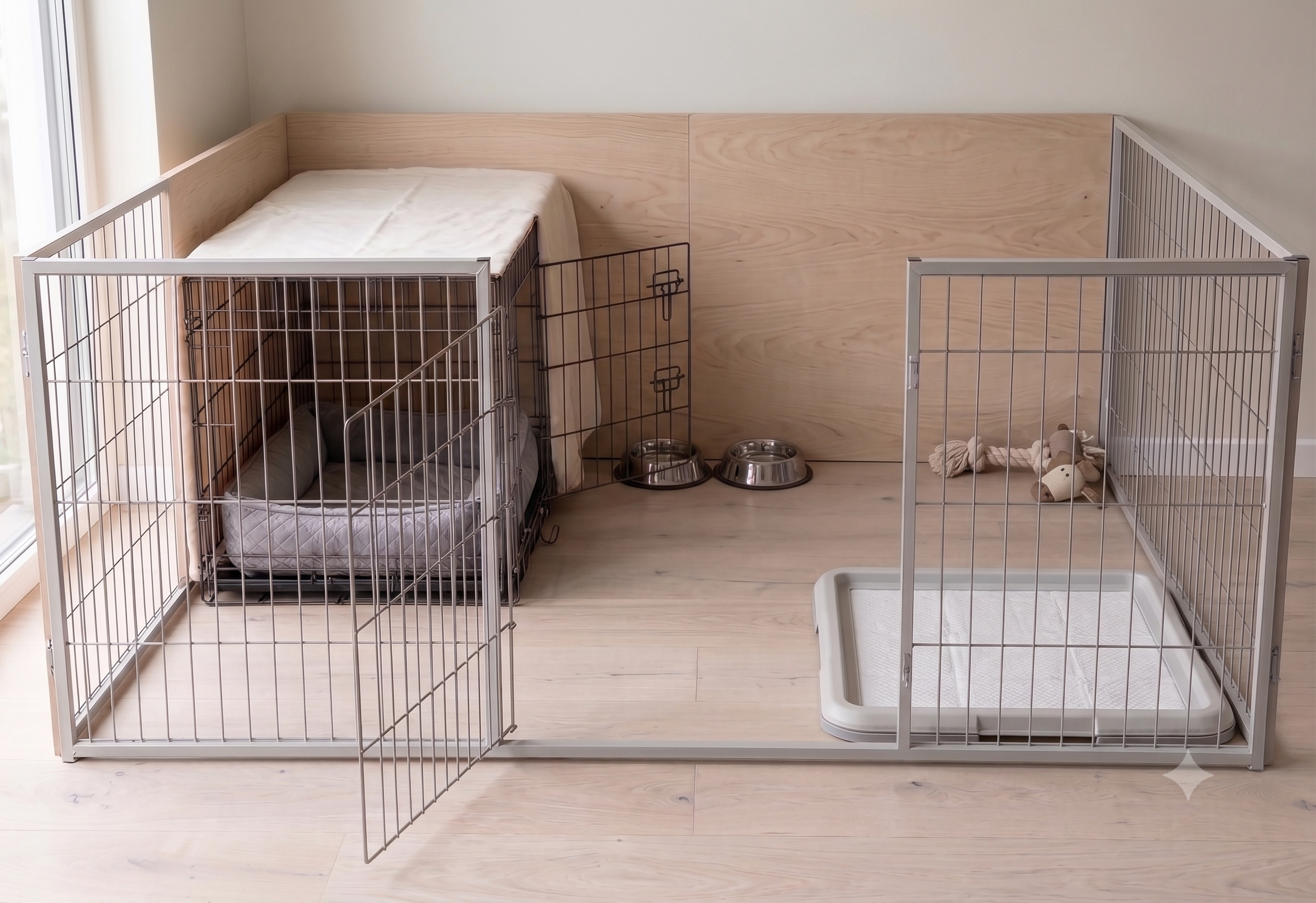
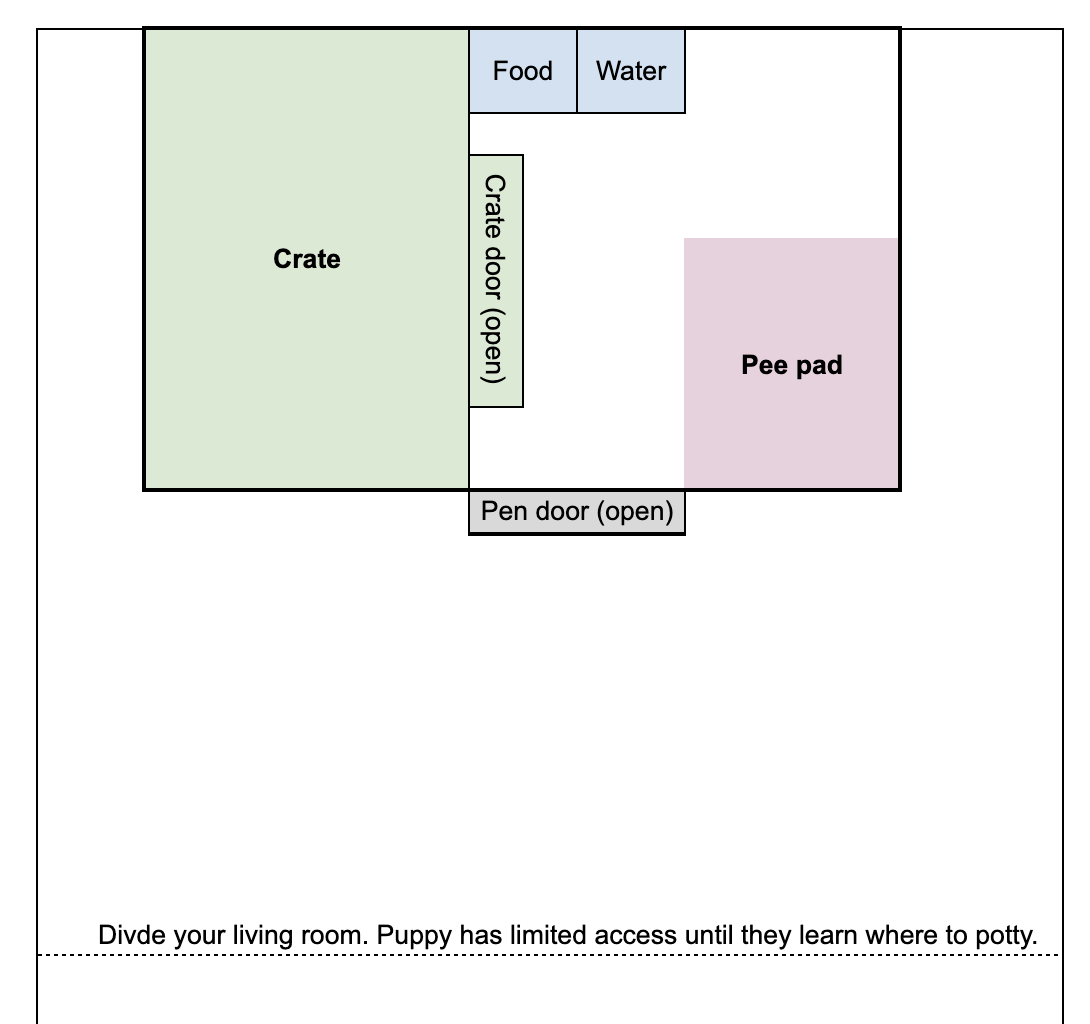
- Put the pee pad (in a pad holder) as far as possible from the crate where your puppy sleeps, and from their food and water. Dogs naturally avoid soiling near where they rest and eat.
- Divide your living room with extra pen panels so your puppy can roam within a confined space you can supervise easily. They earn more freedom only once they can potty in the right place without accidents — then you can extend the area.
- Set up a smaller pen as well, so your puppy can be independent — eat, drink, sleep and potty — when you're not at home.
- Keep the pen door open whenever you're home and available, and confine your puppy in the pen only at potty time.
Start easy, and slowly improve accuracy
The idea is to make mistakes impossible at first, then gradually raise the bar.
Step 1
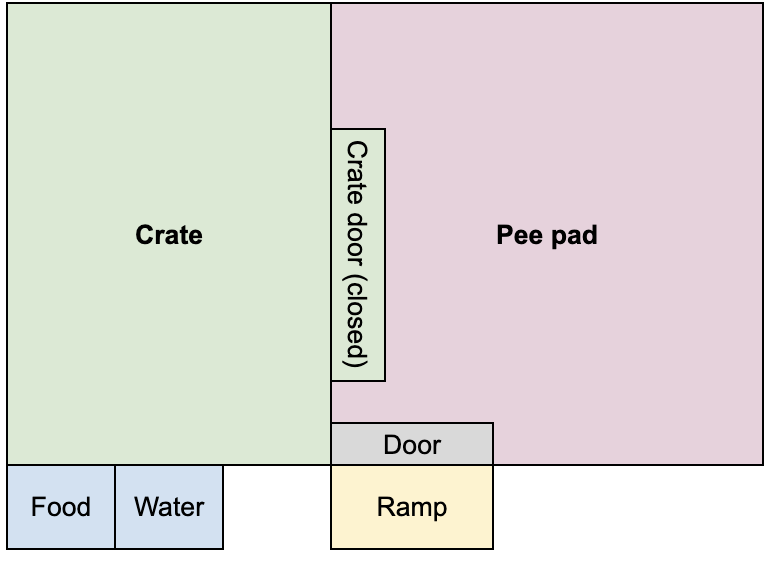
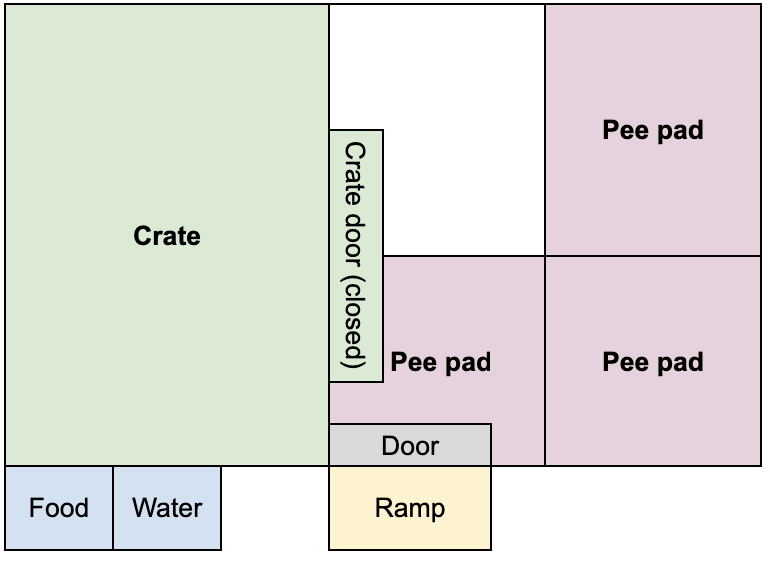
Fill the entire pen with pee pads. With the whole floor covered, your puppy simply can't get it wrong.
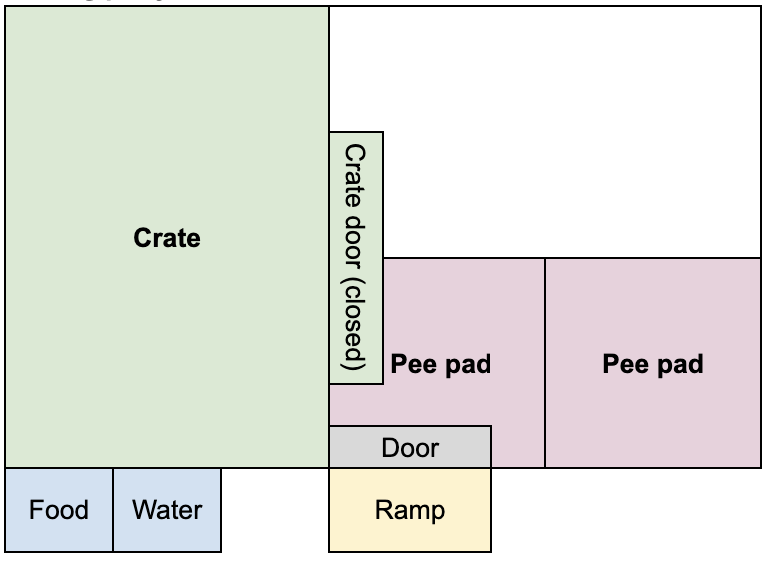
Step 3
Remove more pads as your puppy stays reliable.
Step 2
Each time your puppy uses a pad, replace that pad but remove one of the others. Keep going until only one pad is left.
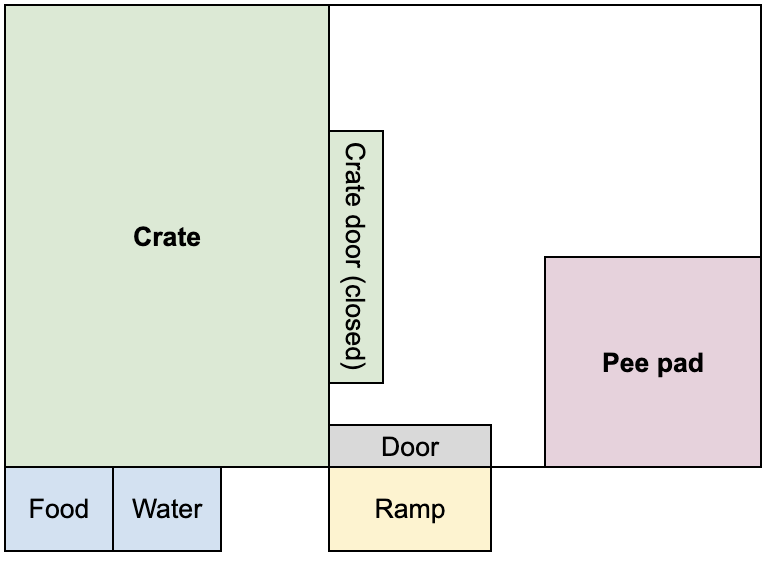
Step 4
One pad left.
Potty training steps
When you're home and awake
- After each potty, let your puppy roam the divided area freely for about 30 minutes. After that, clip on a long leash and tether them to you so you can keep an eye on them at all times.
- At each potty timing (see below), use the long leash to walk your puppy over to the pad and cue them to do their business. Leashing guides them more calmly than carrying or pushing — and a calm puppy is far more likely to actually go.
- As your puppy is peeing or pooping on the pad, say "potty." They'll start to link the word with the act, so you can use it as a cue later on.
- When your puppy pees on the pad correctly:
- Mark it with a "yes" and reward with a treat straight away (within about 2 seconds).
- Then Let them out — freedom is the best reward you can give.
- Finally, replace the pad, wiping a little pee from the old pad onto the new one so your puppy knows where to go next time.
- If your puppy doesn't go after 3–5 minutes, or just keeps lying on the pad, take them out of the pen and try again in about 45 minutes.
When you are not at home or sleeping:
- Confine your dog to the pen.
Remember, this only limits where they can go — you can't actively train while you're away.
Potty timing, and why logging matters
Potty timing
Strong triggers
- Right after wake up - from sleep or nap
- Right after eating - breakfast, lunch, dinner
- 1 hour after eating
- X hours after last potty (age in months + 1 = X hours they can hold their pee)
Weaker triggers
- After drinking
- After playing or training
- Before sleep
Routine and logging
- Copy the log template below and make it your own.
- Fix your mealtimes so potty times become more predictable.
- Feel free to rearrange, but stay true to the timings above. If you serve dinner earlier and go to bed later, for example, add a few "X hours after last potty" slot between the two.
- In the template I've used 2 hours after each potty as a starting point. Work out your own figure first (age in months + 1), then check your potty log to see how often your puppy actually needs to go.
- If your puppy doesn't go at the scheduled time, don't worry — just try again in 45 minutes.
Accidents happen
Caught in the act
Calmly bring your puppy straight back to the pad and wait there a few minutes, repeating your cue.
Already done the deed
No punishment. just clean up.
Why no punishment?
Yelling or scolding is counterproductive. All it teaches your puppy is to go somewhere secret, or to hide the evidence.
How to clean up?
Clean up the soiled area thoroughly with an enzyme-based cleaner (like this one) so your puppy can't follow the lingering scent back for round two.
✋🏻 When the guide isn't enough
Sometimes it's not a knowledge problem:
- Your flat won't fit the ideal layout
- Your timing is a beat off and you can't tell where
- Your puppy has a specific habit (pad-chewing, wrong-corner squatting) that needs live diagnosis
- You've been at it two weeks and you're out of patience
That's what my 90-minute proof visit is for. I come to your home, fix the setup, and coach your puppy to the right spot with you before I leave.
FAQ
My puppy plays with and chews the pad. What should I do?
Use a pad holder to protect a single pad. For a larger area, tape several pads into one big pad, tape the edges to the floor, and pin the edge down with the pen. Teach the "leave it" command, then practise it on the pads. Leash your puppy on the way to the pad so you can control their movement. If they keep lying down on it, take them out and try again later.
My puppy pees in their crate. What should I do?
First priority, crate train first. Once your puppy recognises the crate as their sleeping spot, they'll stop peeing in it — dogs don't like to soil where they sleep.
My puppy sleeps on the pad. What should I do?
Crate train so your puppy learns the crate is for sleeping, and leash them on the way to the pad to control their movement. If they keep lying down on it, take them out and try again later.
Extend the time between potty first, or improve accuracy first?
Improve accuracy first. Once your puppy reliably knows where to go, life gets much easier — and the longer gaps between breaks tend to take care of themselves.
When should my puppy potty outside?
Two things need to line up first: vaccination, and bladder capacity. Vaccination. Vets generally recommend avoiding public potty spots — pavements, common corridors, parks — until your puppy is fully vaccinated at around 16 weeks. That's because parvo and other diseases live in shared ground where infected dogs have been. Your own private balcony or garden is much lower risk, so if you have one, you can start outdoor pottying there earlier. Bladder capacity Ideally, if you are always with your puppy, you can start potty training outside as soon as vaccination allows. However, most people do not have the luxury to always be there. You should start when they can comfortably hold their pee for a long stretch — around 8 hours, which most dogs reach at about 7 months old. Until then, the indoor pad is doing an important job, and pulling it too early just creates accidents. When they're ready, move the potty spot gradually rather than all at once: Shift the single pad a little closer to the door each day — a foot or so at a time. Then move it to just outside the door. Then to outdoor spot. Once they're going reliably outside, you can retire the pads for good. One caveat on the 12-hour figure: that's their capacity, not a daily holding-pee-target. Being able to hold it that long doesn't mean they should have to — keep offering regular breaks. Buy me a coffee